RSCC SpiritStories
- Top
- RSCC Spirit
- Bringing standardization and automation to life sciences
2026.07.28
In life science experiments, even small differences in conditions or procedures can affect results, making reproducibility difficult to ensure. RIKEN research scientist Yoshiaki Kinosita had long been concerned about this challenge. He then met Atsushi Yamada, an engineer who had developed factory automation systems that use the Seiko Group's precision technologies to repeat operations accurately. A microbial researcher and a mechanical design engineer might seem an unlikely pair, but together they began rethinking life science experiments through standardization and automation. Their first step was to develop a smart bioreactor that automates microbial cultivation.

“I thought I had used exactly the same conditions as yesterday, yet today's experiment did not reproduce yesterday's result.”
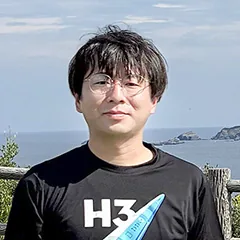
Many life science researchers will recognize this experience. Yoshiaki Kinosita, a research scientist in RIKEN's Molecular Physiology Laboratory, also questioned the ambiguities in biological experiments. He now studies bacterial immune systems and routinely cultures organisms such as E. coli.
“In our experiments, we spread E. coli on an agar plate and grow it until colonies form. We then collect the bacteria by picking a colony with a thin stick. Yet papers do not specify the size of the colony that was picked. Life science experiments depend heavily on undocumented intuition and individual expertise.”
Working with diverse populations of living organisms while relying on the experimenter's intuition can lead to poor reproducibility.
“In university laboratories, it is common to find that an experiment can no longer be reproduced after the student who performed it graduates. Unconscious differences in how liquid is dispensed with a micropipette or when reagents are added can prevent reproduction of the results.”
Finding conditions that ensure reproducibility takes time and money. Kinosita believes standardization and automation offer a modern solution to dependence on individual technique. If machines control procedures under the same conditions around the world, he reasons, reproducibility problems can be overcome.
Automation also lets researchers devote time previously spent performing experiments to thinking. More time for fundamental questions—what should we investigate, and what experiments will answer it?—can help research reach deeper into its subject.
One of Seiko Future Creation's businesses is factory automation, using precision technology to support automated manufacturing. While exploring new fields, the company became interested in the growing biotechnology and pharmaceutical sectors. Atsushi Yamada was among those who visited RIKEN's Molecular Physiology Laboratory through the Advanced Technology Foundation (ATF).
The Molecular Physiology Laboratory specializes in single-molecule measurements of biomolecules and brings together researchers from life sciences, engineering and other fields. As Yamada explored ways to help automate experiments, microbial cultivation happened to come up in conversation.
Cultivation can take more than 20 hours and may require regular sampling or reagent addition at specific times, sometimes late at night. Automating microbial cultivation emerged as a joint research topic, and Kinosita joined the project as the researcher working with microorganisms.
Kinosita recalls being surprised: “Why would Seiko, the watch company, work on automating biological experiments?” But he sensed strong synergy between the assembly of tiny components and the microscopic organisms he studies.
“Visiting the factory made me realize how well our microscopic worlds fit together.”
Yamada is equally candid: “At first, I was about 70 percent apprehensive.”
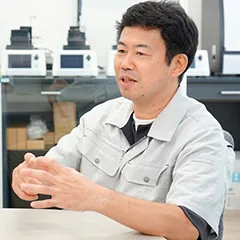
“The industrial products we usually handle are dry, solid objects. Biological experiments involve wet materials, which is a completely different matter. Living organisms also present the distinctive challenge of constant change. Still, both fields deal with tiny objects, and I was simply interested in biology and DNA, so it sounded exciting too.”

As Kinosita and Yamada freely exchanged ideas about automating microbial cultivation, a question emerged: could a flask be heated right on a desk?
To culture microorganisms, liquid medium is placed in a tube or flask, inoculated and agitated at a set temperature. Conventional culture equipment secures tubes or flasks to a shaking mechanism inside a temperature-controlled bath or incubator.
Yamada instead developed a design with a Peltier element beneath the flask.
A Peltier element is an electronic component that can both heat and cool when current passes through a semiconductor. Securing the flask above it allows the culture medium to be heated or cooled directly. Temperature changes can also be programmed at specified intervals.
Another distinctive feature is an LED and camera beside the flask, which optically measure E. coli growth as turbidity in real time. The system also adds reagents automatically during cultivation. Together, these features enable programs such as lowering the temperature and adding a reagent when E. coli reaches a set concentration. Temperature, time and measured concentration are saved automatically, eliminating manual recording.

ACKNOS, the first biological experiment automation system developed by the RIKEN–Seiko Collaboration Center (RSCC)
Kinosita and Yamada named their shaker the smart bioreactor “ACKNOS,” short for Adaptive Cultivation with Knowledge-based Navigation and Observation System.
Developing the smart bioreactor led each to respect the other's approach. Kinosita enjoys seeing his ideas take shape: “Mr. Yamada quickly turned my vague ideas into something tangible. Thanks to him, developing hardware feels much more accessible.”

Yamada also finds working in a new field rewarding: “The initiative and imaginative approaches to data analysis of RIKEN researchers, including Dr. Kinosita, are impressive. They keep proposing machines to obtain particular kinds of data. Discussing how to realize those ideas as hardware is very stimulating.”
The smart bioreactor is intended to be an evolving platform, rather than a finished product that stays unchanged. Joint research with another company is already underway to enable real-time pH measurement. The team also hopes to monitor oxygen concentrations and metabolites during cultivation to advance data-driven research. Although the current system supports only E. coli, they aim to extend it to lactic acid bacteria, yeast and cell culture.
What comes after cultivation experiments are standardized and automated? Kinosita's goal is a public database of cultivation data.
“Public genome and protein databases are shared around the world, but we do not have the equivalent for cultivation data. By standardizing and automating experimental conditions, I hope we can make it possible for anyone to access the data and reproduce experiments under the same conditions.”
Rather than designing cultivation conditions from scratch, researchers could use public data as the best available recipe. Kinosita hopes to pioneer data-driven research in which cultivation data are shared and fed back into experiments.
Yamada shares this vision.
“Manufacturers will increasingly need to provide lasting value beyond selling equipment. I hope cultivation data will be shared and our instruments chosen to reproduce those conditions. Through data sharing, we want to build an ecosystem that benefits both manufacturers and researchers.”

RSCC could help set this process in motion. By also serving as a hands-on showroom, it aims to demonstrate automation technologies and create opportunities for collaboration with industry and academia. “Having a place like RSCC lets us see directly what researchers need,” says Yamada. Kinosita adds: “I believe RSCC's mission is to incorporate our experience and expertise into automated instruments, creating a foundation that enables anyone to perform sophisticated experiments.” Together, they hope to take a first step toward the next generation of life science experimentation.
Kinosita: “Dialogue between people with different backgrounds in industry and academia brings fresh perspectives. Please visit RSCC, try the instruments for yourself, and help us build the future of data-driven research.”
Yamada: “Let us work as equal partners to develop standardized, automated instruments and tackle challenges together, going beyond the relationship between equipment manufacturer and user.”